

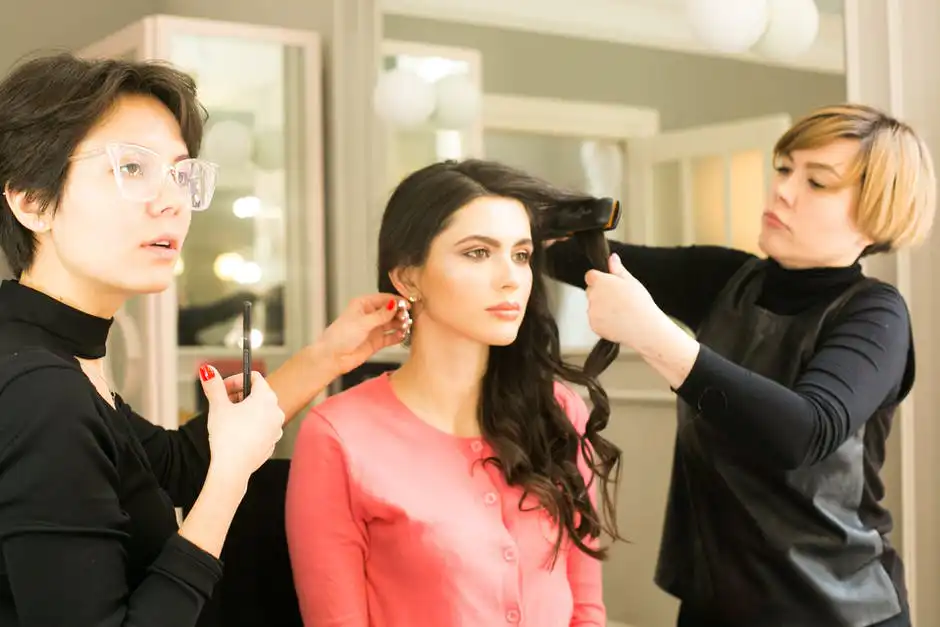
For too long, cosmetology education in America had a blind spot. Students were taught primarily on straight hair mannequins, graduating with little to no knowledge of how to care for wavy, curly, or coily textures. In a diverse city like Dallas, that approach is no longer acceptable. The modern beauty industry demands professionals who are “texture-inclusive”—stylists who can confidently work with any client who walks through the door, regardless of their hair type.
At Invictus Career College, we believe that true cosmetology excellence means mastering the entire spectrum of hair. From Type 1 (straight) to Type 4 (coily), every texture has unique needs regarding moisture, tension, and chemical processing. With the passing of the CROWN Act (Creating a Respectful and Open World for Natural Hair) in Texas, there is a renewed legal and cultural focus on ending hair discrimination. As a future cosmetologist, becoming a texture expert isn’t just a niche; it is a necessity for a successful, limitless career.
The Science of Curl and Coil
Working with textured hair is vastly different from working with straight hair. It requires a deeper understanding of physics and hydration. Curly hair is naturally drier because the scalp’s oils have a harder time traveling down the spiral shaft.
You must learn the “slip” required for detangling without breakage. You need to understand how heat affects shrinkage—how a cut that looks shoulder-length wet might jump up to ear-length when dry. Our curriculum dives deep into these mechanics. You learn the difference between a “silk press” (temporary straightening) and chemical relaxing, and crucially, how to maintain the integrity of the curl pattern during coloring. Leading industry platforms like NaturallyCurly emphasize that the most sought-after stylists are those who prioritize hair health over heat damage, teaching clients how to love and manage their natural pattern.
The Lucrative World of Protective Styling
One of the most profitable skills for a Dallas cosmetologist is protective styling. Braids, twists, locs, and sew-in extensions are not just styles; they are protective measures that shield natural hair from environmental damage.
These services are high-ticket and time-intensive, meaning they command a premium hourly rate. However, they require rigorous technique. Improper tension can cause traction alopecia (hair loss around the hairline). A licensed professional knows the anatomy of the scalp and how to install extensions safely. Mastering knotless braids, soft locs, or wig installations opens up a massive clientele base. In Dallas, where the humidity can ruin a blowout in minutes, protective styling is a year-round staple, ensuring a consistent income for stylists who specialize in it.
Chemical Safety for Textured Hair
The most critical intersection of science and texture is chemical processing. Textured hair is often more fragile than straight hair due to the points of twist in the hair shaft, which are weak spots.
Applying bleach or relaxer to textured hair requires surgical precision. You need to know exactly how to buffer the chemical to prevent melting the curl pattern or causing breakage. We teach the chemistry of bonds—how to break them for color and how to repair them with treatments like Olaplex or K18. This knowledge allows you to perform dramatic transformations—like turning a dark brunette Type 4 curl into a platinum blonde—without sacrificing the hair’s elasticity. Industry associations like the Professional Beauty Association highlight that chemical safety education is the single most important factor in reducing liability and building client trust.
Your Dallas Experts for Cosmetology
Don’t limit your career by limiting your skills. We provide comprehensive training that prepares you to work with every hair type and texture with confidence and care. Trust Invictus Career College to make you a truly inclusive beauty professional. Explore the diverse curriculum of our Cosmetology program or apply today via our Contact Us link.
 English
  Spanish
  French